Thinking about a move to the Front Range and trying to decide where Louisville fits? You are not alone. For many buyers and relocators, Louisville stands out because it blends a historic core, later-built neighborhoods, and practical access to the US-36 corridor without losing its local identity. If you want a clearer picture of how daily life, housing, and mobility come together here, this guide will help you compare your options and plan your move with more confidence. Let’s dive in.
Why Louisville draws relocators
Louisville offers a mix that can be hard to find in one place. You get a city with roots as a mining town dating to 1878, a historic downtown-adjacent area, newer planned neighborhoods, and business districts that support day-to-day convenience.
The city identifies key commercial areas as Downtown Louisville, South Boulder Road, Colorado Technology Center, and McCaslin Boulevard. That matters when you relocate because it means your routines are not tied to just one part of town. Whether you value a more historic setting or easier access to newer services and commuter routes, Louisville gives you multiple ways to live.
Louisville housing feels varied
One of Louisville’s biggest strengths is that its housing stock does not feel one-note. Instead, you will find a range of home styles and neighborhood layouts that can appeal to different stages of life and different relocation goals.
For buyers moving from another Front Range city, that variety can make Louisville feel flexible. If you want charm and older architecture, there are areas near the historic core. If you want a more planned subdivision feel, there are options for that too.
Old Town offers historic character
Louisville describes Old Town as a historic residential neighborhood surrounding downtown with diverse architecture and unique appeal. This area connects closely to the city’s identity and includes homes and streetscapes that feel distinct from later suburban development.
In nearby Jefferson Place, just one block west of Main Street, the pattern is especially clear. The area follows a standard urban grid with narrow, deep lots, rear alleys, consistent setbacks, small front lawns, and mostly one- to one-and-one-half-story wood-framed residences. If you are drawn to a more traditional block pattern and a downtown-adjacent lifestyle, this part of Louisville is worth close attention.
Common home styles in Louisville
Historic-context materials from the city note that bungalows are abundant in Louisville. Many show features like stucco, clipped gables, porches, and Craftsman influence.
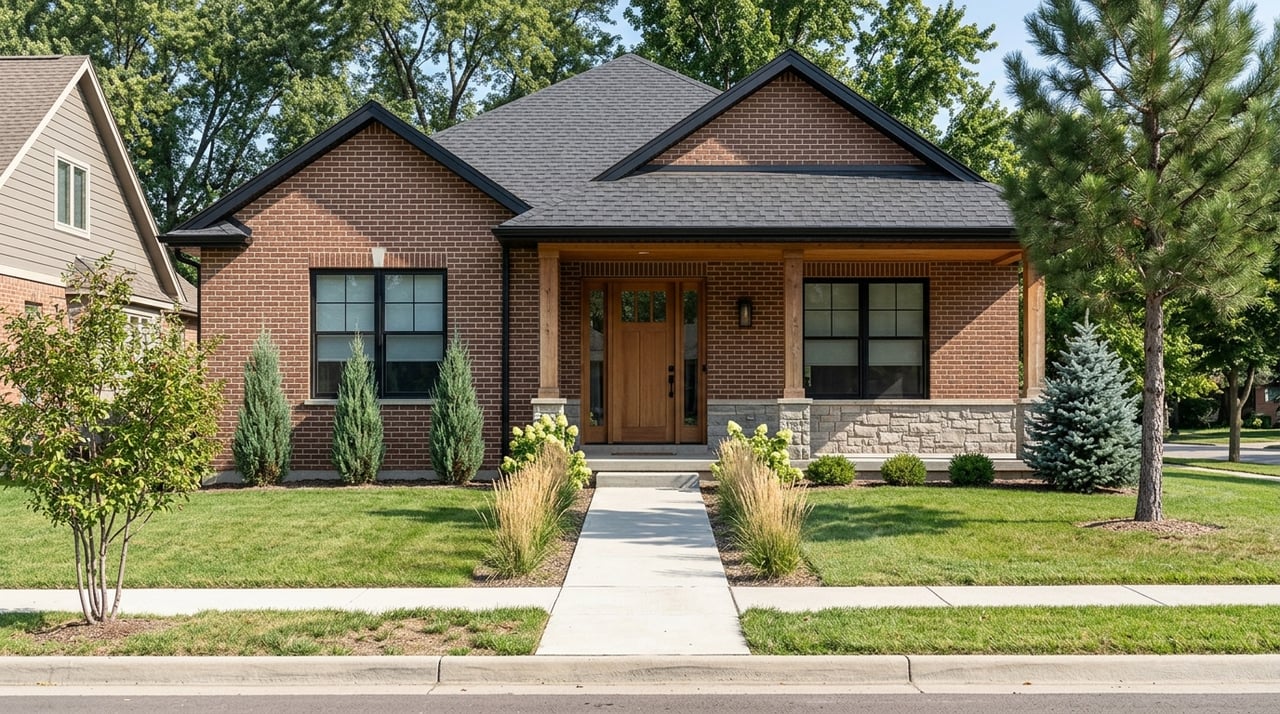
The city also notes that postwar ranch houses became the primary house form in the 1950s and 1960s. In practical terms, that means your home search may include older bungalow and cottage-style homes in and near Old Town, along with ranch-style and later suburban housing in other parts of the city.
Newer subdivisions add another option
Louisville is not only about historic housing. City materials also identify newer planned subdivisions and PUD-based neighborhoods, including Steel Ranch and Coal Creek Ranch.
The city also points to Downtown East Louisville, often called DeLo, as an area adding new retail space, 180 housing units, and office space near the core. For relocators who want newer housing or a more recently planned setting while staying close to central Louisville, these areas can be part of the conversation.
Daily life often revolves around mobility
When you relocate, the home itself is only part of the decision. You also need to think about how you will move through your week, from work trips to errands to recreation.
In Louisville, the US-36 corridor plays a major role in that equation. The city specifically points residents to RTD transit services, the Flatiron Flyer, AB service to Denver, and a US-36 commuter incentive program through Commuting Solutions.
US-36 access supports regional commuting
For many households, Louisville’s commuter value starts with its position along US-36. That corridor helps connect residents to surrounding Front Range destinations and supports both driving and transit-based routines.
RTD’s US36/McCaslin Park-n-Ride in Louisville has 466 parking spaces. It serves routes 228A and 228F, AB1, AB2, AB3, and Flatiron Flyer routes FF1, FF2, FF4, and FF5. If you expect to split time between home and other Front Range job centers, that kind of transit access can be a meaningful advantage.
Trails support an active routine
Louisville also leans into active transportation. The city says it has about 32 miles of trails, and Class 1 and Class 2 e-bikes are allowed on city streets and trails.
That can shape your daily life in practical ways. Depending on where you live, errands, recreation, and some school or local trips may be easier to handle without relying on a single-occupancy car trip every time.
School planning takes address-level detail
If school logistics are part of your move, Louisville is served by Boulder Valley School District. BVSD school-travel maps list Louisville Elementary, Fireside Elementary, Coal Creek Elementary, Louisville Middle School, and Monarch Campus among district schools.
BVSD also says it has 56 schools in 11 communities. For relocators, that bigger district footprint means you should think beyond city boundaries and look carefully at assignment details tied to a specific address.
Boundary checks matter in Louisville
BVSD reviews attendance-area boundaries at least every five years. The district also states that if a property straddles a boundary, assignment is determined by the driveway access point.
That is a useful reminder during a home search. If school assignment matters to your move, address-level verification is important before you make decisions based on a map alone.
Transportation options can affect your shortlist
BVSD’s school-travel materials emphasize walking, biking, bus, and carpool options. For many buyers, that makes it easier to compare daily routines across Louisville, Boulder, and Lafayette.
A home that looks similar on paper can feel very different once you factor in school travel patterns. Commute timing, route simplicity, and how much flexibility your household needs can all influence which part of Louisville feels like the best fit.
Louisville vs Boulder and Lafayette
Many relocators compare Louisville with Boulder and Lafayette before making a move. That makes sense because the three markets can overlap in lifestyle goals, commute planning, and housing preferences.
Still, they are not interchangeable. Louisville tends to sit in a useful middle position for buyers who want a balance of historic character, suburban options, and access to the broader Front Range.
Compared with Boulder
Boulder is often the clearest comparison for buyers who want a more bike-oriented and preservation-focused environment. The city says it has 10 historic districts and more than 1,300 designated historic properties, along with more than 300 miles of bikeway in the Boulder Valley.
Relative to Louisville, Boulder has more formal historic-district coverage and a much larger bike network. If you want a city with a strong historic framework and a broader bikeway system, Boulder may be the benchmark. If you want some of that character while keeping Louisville’s mix of neighborhood types and US-36 access, Louisville can be a strong alternative.
Compared with Lafayette
Lafayette can feel like a middle-ground comparison for some buyers. Its planning documents emphasize complete neighborhoods and a walkable, bikeable human scale, while also highlighting historic preservation tied to notable properties, neighborhoods, mining heritage, and rural places.
Lafayette and Louisville also connect in regional planning through the Future 42 corridor study for Highway 42. For relocators, the practical takeaway is that both cities can work for buyers who want community scale and Front Range access, but Louisville’s defining edge is often the combination of its historic core, family-oriented subdivisions, and direct US-36 commuter network.
What to prioritize before you move
A relocation decision gets easier when you narrow your search around everyday patterns instead of broad impressions. Louisville has enough variety that your best-fit area may depend more on routine than on price or style alone.
As you compare homes and neighborhoods, focus on the factors that will shape your week the most:
- How often you need access to the US-36 corridor
- Whether you prefer historic blocks or newer subdivision layouts
- How important trail access is to your routine
- Which school logistics matter for your household
- Whether you want to be closer to downtown, McCaslin, or other business areas
That kind of planning can help you avoid chasing listings that look good online but do not fit how you actually want to live.
How a local advisor helps
When you are relocating, the challenge is rarely just finding homes for sale. The harder part is understanding how block patterns, commuting options, school boundaries, and neighborhood feel come together in real life.
That is where a data-informed local approach matters. With the right guidance, you can compare Louisville against Boulder and Lafayette more efficiently, narrow your search faster, and make decisions based on how the city functions day to day, not just on listing photos.
If you are planning a move to Louisville or weighing it against other Front Range communities, Nick Crothers can help you build a smart, practical relocation strategy.
FAQs
What is Louisville, Colorado like for relocation?
- Louisville offers a mix of historic residential areas near downtown, newer planned subdivisions, business districts across several parts of the city, and access to the US-36 corridor for regional commuting.
What types of homes are common in Louisville?
- Louisville housing often includes older bungalows and cottage-style homes in and near Old Town, plus postwar ranch homes and later suburban housing in other neighborhoods.
How do Louisville school boundaries work?
- Louisville is served by Boulder Valley School District, and attendance boundaries should be verified by address because BVSD reviews boundaries periodically and uses the driveway access point for properties that straddle a boundary.
Is Louisville good for commuting on the Front Range?
- Louisville has strong commuter relevance because of the US-36 corridor, RTD service, Flatiron Flyer access, and the US36/McCaslin Park-n-Ride with 466 parking spaces.
How does Louisville compare with Boulder?
- Boulder has more formal historic-district coverage and a much larger bikeway network, while Louisville offers a blend of historic charm, newer subdivisions, and practical US-36 access.
How does Louisville compare with Lafayette?
- Louisville and Lafayette both appeal to buyers who want Front Range access and neighborhood variety, but Louisville often stands out for its historic core, subdivision mix, and direct commuter-network connections.