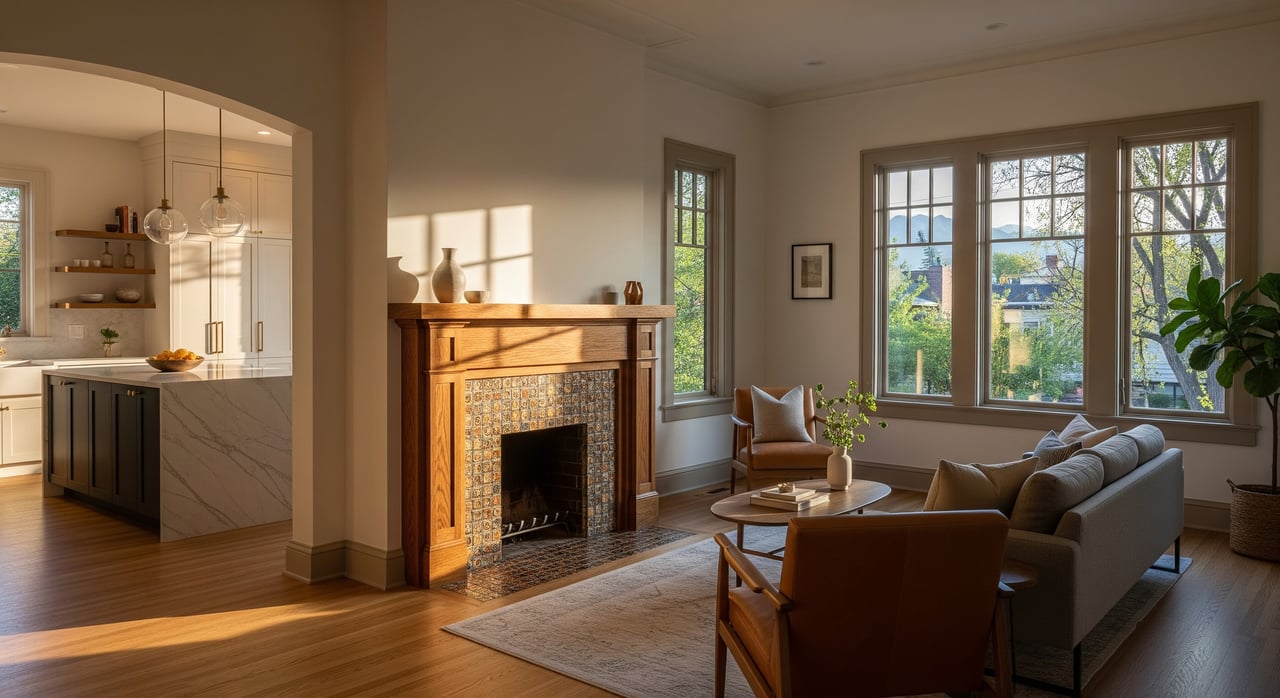
Ever wonder why two West Highland homes with similar square footage can sell hundreds of thousands apart? If you have been leaning on price per square foot to guide your expectations, you are not alone. It is a handy shortcut, but in West Highland it often misses the real drivers of value. In this guide, you will learn why raw PPSF can mislead and how to make simple, practical adjustments so you can price or evaluate with confidence. Let’s dive in.
Why PPSF falls short
Price per square foot is the home’s sale price divided by its above‑grade living area. It is quick, easy to compare, and helpful for a first pass across many listings. You can use it to spot outliers or see broad price bands.
Here is the catch. PPSF treats every square foot as equal, which rarely holds true in West Highland. It ignores age and condition, finish quality, layout, ceiling height, and how usable the floor plan actually feels. It also misses land value, lot utility, ADU potential, and tiny micro‑location differences that carry real premiums or discounts.
The implication is simple. Use PPSF as a filter, then adjust for the big five: vintage and condition, lot size and utility, ADU potential, finish and functional square footage, and micro‑location.
West Highland factors to check
Vintage and condition
Many West Highland homes are early 20th‑century bungalows and Victorians alongside newer infill builds. Character details and sensitive rehabs often command a premium because buyers value usable, modernized space. On the other hand, larger homes that need full renovation can drag down PPSF until updated.
What to check:
- Year built and construction type.
- Recent remodel permits and scope.
- Major systems: roof, HVAC, electrical, sewer lateral.
How it affects value: A turnkey historic rehab often sells higher per square foot than an unrenovated twin. A dated or functionally obsolete layout can lower market value even if the home is larger on paper.
Lot size and utility
Lot area and utility vary widely in West Highland. Larger or rectilinear lots add value because they can support a better backyard, a garage, an ADU, or future expansion. Flat lots with alley access and a clear buildable footprint typically out‑perform steep or awkward lots.
What to check:
- Assessor lot area and shape.
- Alley access, easements, and setbacks.
- Flood plain or site constraints that limit building.
How to quantify: Derive a local land value per square foot from nearby vacant lot sales or assessor land allocations, then apply it to lot size differences between comps. If you cannot get a tight number, use a conservative dollar band and refine later with better comps.
ADU potential
ADU premiums depend on zoning, permit status, parking, and rental demand. A legally permitted, income‑producing ADU tends to trade at a measurable premium compared with otherwise similar homes. “Possible” ADU value is speculative until you verify zoning and permits or complete construction.
What to check:
- Permit history and legal status of any existing unit.
- Zoning allowances for ADUs and typical setbacks.
- Alley access, utility capacity, and probable rental levels.
Finish and functional square footage
Not all square footage sells the same. High‑end kitchens and baths, principal suites, taller ceilings, and open layouts tend to move the needle more than raw area. Bed‑bath count and distribution also matter. A 2,000‑square‑foot home with a smart 3‑bed, 2‑bath layout can outpace a larger home with awkward flow.
What to check:
- MLS photos and remarks for finish quality and layout.
- Permit records for recent interior upgrades.
- Room counts, bath count, and how space is used.
Micro‑location effects
Two blocks can make a difference. Proximity to Sloan’s Lake, Highlands Square or Tennyson, transit stops, and view corridors often drive premiums. Homes near busy arterials or noise corridors can experience discounts.
What to check:
- Distance to Sloan’s Lake and neighborhood retail nodes.
- Access to transit and parks.
- Nearby noise sources and viewlines.
How to gauge impact: Compare sales within small radii, such as within a quarter mile of Sloan’s Lake versus farther away, and see how PPSF shifts.
Simple adjustment framework
You can turn a raw PPSF comparison into a more realistic adjusted price by stepping through a simple worksheet.
Step‑by‑step
Select the right comps. Pull 3 to 5 closed sales from the last 3 to 6 months that are physically and locationally close. Stay consistent on above‑grade square footage.
Compute raw PPSF for each comp. Divide the sale price by above‑grade living area to create a baseline comparison.
Identify feature differences. For each comp, list differences versus your subject across the five drivers: vintage and condition, lot, ADU status, finish and function, and micro‑location.
Apply adjustments. Use dollar adjustments for discrete items like lot size and ADUs, and percentage multipliers for finish or condition. Label each assumption so you can refine it later.
Recompute adjusted values. Add the adjustments to the comp’s sale price to get an adjusted comp price, then divide by the subject’s above‑grade square feet to generate an adjusted PPSF. Repeat for all comps and take a weighted view, favoring closer matches and more recent sales.
Illustrative starting ranges
These are starting bands to help you structure your analysis. Calibrate them with nearby comps or an appraiser before using them for a final decision.
- Condition or remodel need: about −5% to −25% of sale price depending on scope.
- Lot size and utility: value the lot delta in square feet times a local land value per square foot, or use a conservative dollar band if you lack tight land comps.
- ADU value: add a premium based on comparable sales with legal ADUs or by capitalizing expected net rent. As a rough orientation, bands can span roughly $25,000 to $150,000 depending on size and permit status.
- Finish level: about ±5% to 20% based on kitchen, baths, built‑ins, ceilings, and layout.
- Micro‑location: about ±3% to 15% based on proximity to Sloan’s Lake or key retail nodes versus adjacency to busy corridors.
Worked example (hypothetical)
This example is for illustration only, not a real comp or quote.
- Comp A: sold for $850,000; 2,000 square feet above grade. Raw PPSF = $425 per square foot.
- Differences versus your subject:
- Comp A has a permitted 1‑bedroom ADU: +$75,000.
- Comp A’s lot is 2,500 square feet larger. Using an illustrative $15 per square foot land value: +$37,500.
- Comp A is fully remodeled while your subject needs light updates: +8% of sale price.
Dollar adjustments total: $112,500. Percent adjustment: 8% of $850,000 = $68,000. Adjusted comp price = $850,000 + $112,500 + $68,000 = $1,030,500. If your subject is 2,100 square feet above grade, the adjusted PPSF is about $491 per square foot. Use this side by side with other adjusted comps for a range.
Two quick comparisons (hypothetical)
Example 1: ADU and lot premium
- Raw view: Your 1,900‑square‑foot bungalow is listed near $900,000, or about $474 per square foot. A nearby 1,900‑square‑foot sale closed at $850,000, or $447 per square foot. Raw PPSF suggests you are high.
- Adjusted view: Your home has a legal 1‑bed ADU and a larger, rectilinear lot with alley access. If the ADU premium is estimated at $80,000 and the lot delta is $20,000, the adjusted comp becomes $950,000. Suddenly, your pricing looks reasonable once you account for what buyers actually pay for.
Example 2: Condition drag on PPSF
- Raw view: Your 2,200‑square‑foot Victorian is listed at $1,050,000, or $477 per square foot. A similar‑size home sold for $1,025,000, or $466 per square foot, so you feel confident.
- Adjusted view: The sold comp was turnkey, with a new roof, updated systems, and a modern kitchen. If that finish premium is about 10%, your dated home needs an adjustment down. The adjusted comp would imply a lower target, or a renovation plan before listing to capture the higher band.
Pull and verify comps
- Use local MLS data for closed sales, photos, and room counts. Keep to the last 3 to 6 months when possible.
- Confirm above‑grade square feet definitions match. Finished basements are typically counted separately and merit different adjustments.
- Check the Denver Assessor for lot dimensions, assessed land versus building allocations, and recorded permits.
- Verify ADU status and permit history through city records before assigning any premium.
- Note sale dates and market context. Older comps may need a market‑trend adjustment if rates or seasonality shifted.
- Watch for seller concessions or unusual terms that could distort the recorded price.
ADU value: a simple income lens
You can cross‑check ADU value using income capitalization. Estimate likely net annual rent by taking market rent times 12 and subtracting typical expenses. Apply a local cap rate or use a gross rent multiplier to get an indicative value. Use this as a directional check, not a final answer, since sale premiums often reflect convenience, risk, and buyer demand in addition to income.
Action steps to get it right
For sellers
- Pull permit history and schedule a pre‑listing inspection to uncover systems or code issues that affect value.
- Verify ADU status or feasibility before counting it in pricing strategy.
- Ask for a calibrated adjustment worksheet with condition, lot, ADU, finish, and micro‑location adjustments clearly labeled.
- Consider strategic upgrades before listing. If you prefer not to pay upfront, explore a pre‑listing renovation option that finances improvements at closing with coordinated contractors and a transferable warranty.
For buyers
- Request a comp set that documents ADU status, lot differences, and finish levels, not just raw PPSF.
- Separate above‑grade square feet from finished basement space and adjust basements at a different rate.
- Estimate cost‑to‑cure for older systems and dated finishes, then reflect that in your offer.
- Compare micro‑locations in tight radii and note proximity to Sloan’s Lake and key neighborhood amenities.
When to bring in experts
- Appraiser: for contested adjustments, land value calibration, or when your lender needs a formal opinion.
- Zoning or permit specialist: to verify ADU feasibility, required parking, and setbacks.
- Local agent with deep West Highland experience: to calibrate percentage adjustments and read current buyer behavior.
Move forward with clarity
PPSF is a helpful starting point, but West Highland value hinges on more than square footage. When you adjust for vintage and condition, lot size and utility, ADU potential, finish, and micro‑location, you get a cleaner picture of what your home is truly worth. If you want a data‑backed plan and hands‑on execution, schedule a quick consult with Nick Crothers. We will build a simple adjustment analysis and, if selling, outline a renovation‑to‑market plan that targets maximum net proceeds.
FAQs
Is price per square foot useless in West Highland?
- No. Use PPSF as a quick filter, then adjust for condition, lot, ADU status, finish quality, and micro‑location to avoid mispricing.
How much can an ADU add to a West Highland home?
- It varies widely. A legal, income‑producing ADU often adds a material premium, best measured by nearby sales with permitted ADUs or checked against capitalized net rent.
Where can I find accurate lot value inputs?
- Look at recent vacant lot sales and the assessor’s land‑value allocations near your subject, or consult an appraiser for a calibrated per‑square‑foot land value.
How should I treat finished basements in PPSF?
- Compare above‑grade to above‑grade, then value finished basement space separately at a lower rate that reflects local buyer behavior.
How many comps should I use and how recent?
- Aim for 3 to 5 closed comps from the last 3 to 6 months, prioritizing the closest physical matches and micro‑locations.
Should I advertise PPSF when selling?
- Yes, as a headline metric, but be ready to explain how condition, lot, ADU potential, finish quality, and location affect true market value beyond raw PPSF.