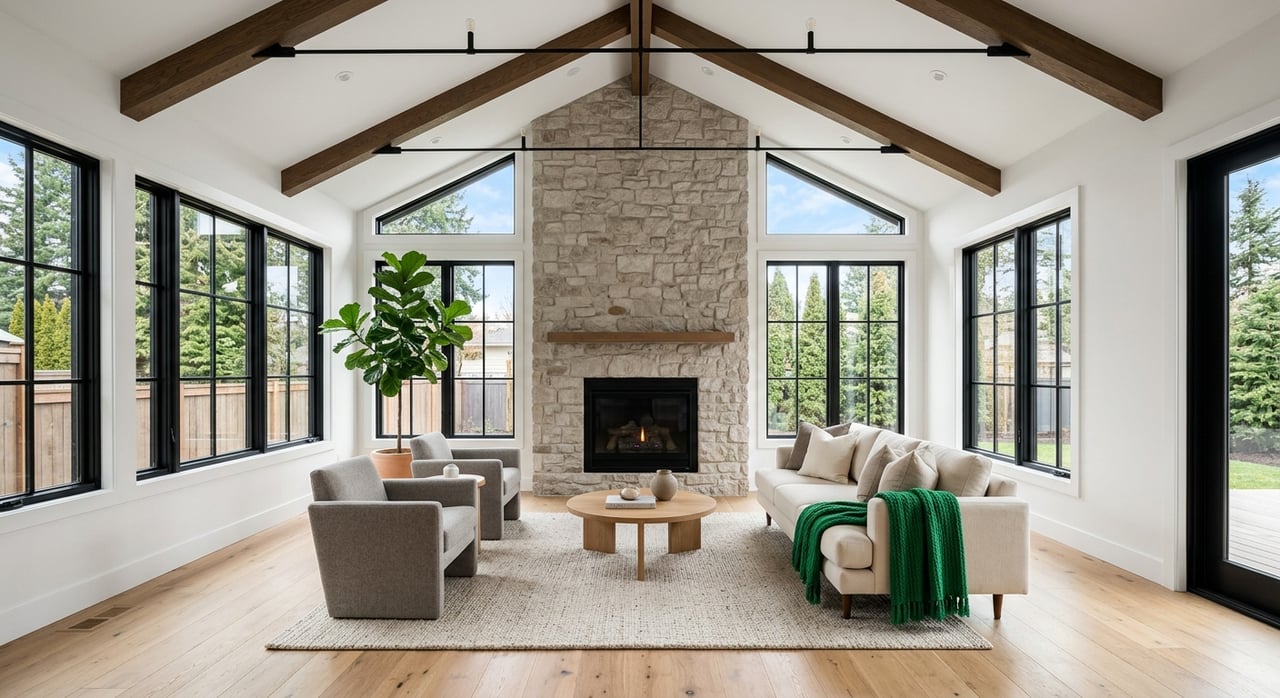
Wondering how to price your Sloan’s Lake home when the market feels strong on paper but pickier in real life? You are not imagining the shift. Buyers are still active in Sloan’s Lake, but they are also comparing more options, negotiating harder, and noticing when a home misses the mark on price. In this guide, you’ll see what the latest local data says, what features are driving value inside the neighborhood, and how to set a price that helps your home stand out from day one. Let’s dive in.
Sloan’s Lake Pricing Is More Selective
Sloan’s Lake is still one of Denver’s premium neighborhoods, but that does not mean every listing can stretch for a top-dollar number. As of May 2026, Redfin reported a median sale price of $887,202 in Sloan’s Lake, up 2.2% year over year, with homes averaging 15 days on market and 53 sales in May.
That is well above Denver County overall. Over the same three-month period, Denver County’s median sale price was $634,098, with 21 days on market and 29.0% of homes taking a price cut. In simple terms, Sloan’s Lake continues to command a meaningful premium, but buyers are still drawing sharper lines between homes that feel well-priced and homes that feel aspirationally priced.
DMAR’s March 2026 report adds more context. Across the Denver metro, active inventory reached its highest level in more than a decade, and buyers gained more leverage as marketing times lengthened. That matters in Sloan’s Lake because even in a desirable neighborhood, a higher-inventory market tends to reward precision over optimism.
Why Accurate Launch Pricing Matters
The easiest mistake in a shifting market is pricing based on last year’s momentum instead of today’s buyer behavior. Redfin still classifies Sloan’s Lake as very competitive, but the neighborhood data shows a split market. The average home sells for about 1% below list and goes pending in around 19 days, while hot homes can sell for about 1% above list and go pending in around 5 days.
At the same time, 38.7% of listings had price drops in the latest read. That combination tells you something important: buyers will pay for the right home, but they are not giving every seller the benefit of the doubt. If your home launches too high, the market often responds with slower traffic, more hesitation, and a greater chance of a price cut later.
Once a listing sits, buyers tend to read that time as leverage. In a neighborhood where many shoppers are watching inventory closely, a stale listing can invite lower offers even if the home itself is appealing.
Sloan’s Lake Is Not One Market
One of the biggest pricing mistakes in Sloan’s Lake is treating the neighborhood like one uniform product. It is not. Redfin tracks all home types together, including single-family homes, townhomes, and condos or co-ops, so you need to stay close on property type when building comps.
A detached lake-adjacent home, a rooftop-deck townhome, and a condo with partial views may all appeal to similar buyers, but they do not trade at the same price per square foot or the same pace. The more your pricing strategy reflects your actual product category, the more credible your list price will feel.
This is where a data-first approach matters. A broad neighborhood average can be a useful headline, but it is rarely enough to price a home correctly in Sloan’s Lake.
Lake Proximity Drives Real Premiums
In Sloan’s Lake, proximity to the water and view quality are some of the clearest value drivers. The lake is not just a nearby feature on a map. It is an actively maintained civic amenity, with improvements through Denver’s Better Denver bond project that included shoreline renovations, an enhanced promenade, a boardwalk, shoreline protection, restroom upgrades, irrigation work, and ADA improvements.
That helps explain why the market pays differently for homes based on how directly they connect to the lake experience. A true lakefront property is different from a home with a peek of water from a balcony. A home that is walkable to the park but without meaningful views is different again.
You can see that price ladder in recent examples. A true lakefront single-family home at 4900 W 17th Ave sold for $1.505 million on June 4, 2026 after listing at $1.5 million. Meanwhile, a 2,460-square-foot townhome at 2020 Newton St sold for $860,000 in May 2026, with the listing emphasizing a lake view from the front door.
Those are not interchangeable comps. They show why pricing should reflect whether your home is truly lakefront, directly view-oriented, partially view-oriented, or simply near the lake.
Property Type and Features Matter
Inside Sloan’s Lake, value is also shaped by property type, renovation level, and how usable the home feels day to day. Lot size can vary a lot from one property to another, but buyers do not price raw square footage in a vacuum. In practice, usable outdoor space, garage capacity, rooftop decks, balconies, and clean sightlines often carry more weight than lot size alone.
That pattern shows up in the listings and sales examples from the neighborhood. If your home has a feature that clearly improves how you experience the location, such as a strong roof-deck view or a more functional outdoor setup, it may justify a premium. If it does not, your price needs to stay grounded in what buyers can get elsewhere nearby.
Condition matters too. A newer or recently updated home can often support stronger pricing than an older renovation, but only if the starting number still fits current buyer expectations.
Recent Comps Show the Cost of Overpricing
The best pricing signals come from recent sales that closely match your home in property type, condition, and view class. In Sloan’s Lake, several recent comps show how the market behaves when a home starts too high.
A 3-bedroom, 4-bath home at 3636 W 26th Ave sold for $1.01 million, which was 2% under its $1.035 million list price, after 96 days on market. Another attached sale at 3220 W 20th St #1 closed at $660,000, also 2% under list, after 92 days.
Those timelines matter. They suggest the homes did sell, but not quickly and not without some pricing friction. In a more selective market, that extra time can reduce momentum and shift negotiating power toward buyers.
By contrast, the lakefront sale at 4900 W 17th Ave moved in 32 days and finished almost exactly where it started. That does not mean every premium home will move that way. It does show that scarce features can still protect value when the opening price is calibrated well.
Price Drops Are a Signal
Price reductions are not unusual in a shifting market, but they are still important signals. In Sloan’s Lake, Redfin’s latest read showed 38.7% of listings with price drops. That is a meaningful share for a neighborhood that still carries a premium reputation.
One useful example is 2501 Zenobia St, a newer-construction home about 200 feet from Sloan’s Lake. It listed at $1.05 million, dropped to $995,000 and then $950,000, and eventually sold for $960,000 in December 2024. The listing highlighted park and lake views, a rooftop deck, and a 3,190-square-foot lot.
The takeaway is simple. Even view-driven homes may need reductions if the first price overshoots what buyers are willing to absorb.
Another cautionary example is 1544 Zenobia St #103, which was asking $575,000 after a prior cut and had reached 103 days on market in the latest Redfin update. Even with lake views and a very walkable location, extended time on market can change buyer perception.
A Smarter Pricing Framework
If you are preparing to sell in Sloan’s Lake, the safest strategy is to build your pricing in tiers rather than relying on one broad neighborhood number. That means matching your home against the closest possible comparables in a few specific ways.
Start with these filters:
- Same property type
- Same view category: lakefront, direct view, partial view, or no meaningful view
- Similar renovation age and finish level
- Similar lot utility, such as outdoor living, garage setup, and view capture
- Similar micro-location within the neighborhood
This kind of pricing framework helps you avoid two common traps. The first is overpricing a good but not rare home because another nearby property sold at a premium. The second is underpricing a genuinely scarce property by comparing it to homes that do not offer the same lake experience.
How to Think About Your Opening Price
In today’s Sloan’s Lake market, the opening price should do more than reflect your ideal outcome. It should also create credibility. Buyers are comparing your home against active listings, recent pendings, and recent sales, often in real time.
If your home is truly rare, such as a strong lakefront or standout view property, the data suggests you may be able to defend a premium. But even premium homes tend to perform best when they launch close to market reality rather than testing an aggressive ceiling.
If your home is updated and attractive but not especially unique, conservative positioning is often the safer play. With more inventory and stronger buyer leverage in the metro, launching too high can cost you more than it gains.
Presentation Still Supports Price
Pricing is the lead strategy, but presentation still matters because it shapes how buyers interpret your number. If your home has features that support value, such as views, outdoor entertaining space, or a strong renovation story, those details need to be clear from the start.
This is also where pre-listing improvements can change the pricing conversation. For some sellers, selective updates, repairs, and presentation work can make it easier to justify a stronger launch price and reduce buyer pushback. The goal is not to over-improve. It is to remove the friction that makes buyers discount your home.
For homeowners who want a more streamlined path, that can include coordinating prep work before listing and aligning those improvements with a data-backed pricing strategy. When the condition, marketing, and price all tell the same story, your home has a better chance to attract serious interest early.
The Bottom Line for Sloan’s Lake Sellers
Sloan’s Lake is still a premium Denver neighborhood, but this is not a market where broad confidence wins on its own. It is a segmented market where the right home in the right micro-location can still move quickly, while a similar home with weaker positioning may sit and need a reduction.
If you are pricing your Sloan’s Lake home today, the goal is not just to aim high. It is to launch with a number the market will respect. That usually means using close comps, reading view and location premiums carefully, and making sure your pricing reflects current buyer leverage instead of past market conditions.
If you want help pressure-testing your price, planning strategic pre-listing updates, or building a launch strategy around Sloan’s Lake buyer behavior, Nick Crothers can help you create a smart, data-backed plan.
FAQs
How should you price a Sloan’s Lake home in a shifting market?
- Start with recent comps that match your home’s property type, view category, condition, and micro-location, then set a launch price that reflects current buyer leverage rather than older peak-market expectations.
What is the median home price in Sloan’s Lake?
- As of May 2026, Redfin reported a median sale price of $887,202 in Sloan’s Lake.
Do lake views increase Sloan’s Lake home value?
- Yes. Recent neighborhood examples suggest that true lakefront homes, direct views, and strong view-oriented features can support meaningful premiums compared with homes that are simply nearby or walkable to the lake.
Are price cuts common in Sloan’s Lake right now?
- Yes. Redfin’s latest neighborhood read showed 38.7% of listings with price drops, which points to a market that rewards accurate pricing at launch.
Why do some Sloan’s Lake homes sell fast while others sit?
- Recent data suggests that homes with scarce features and well-calibrated pricing can move quickly, while homes that start too high or offer less compelling views, condition, or layout may spend much longer on market.
Should you use detached home comps for a Sloan’s Lake townhome or condo?
- No. Sloan’s Lake includes multiple property types, and pricing should stay close to your home’s actual category so the comparison reflects how buyers evaluate similar options.